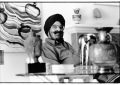


Dhanda takes second round KO in Speaker contest

Parmjit Dhanda, a Sikh member of the British parliament, failed in his bid to become Speaker of the House of Commons in succession to the much-criticised Michael Martin.
After a six-hour election that involved three ballots the job went to Tory backbencher John Bercow, with the surprising backing of many Labour MPs. One motive for their support was said to be a mischief-making delight in embarrassing the Conservative group – Mr Bercow had developed a reputation for challenging the party line.
Mr Dhanda, 37-year-old Labour MP for Gloucester, was one of nine candidates. He was knocked out in the second ballot heading a group of four beaten MPS with 26 votes.
Mr Dhanda had announced his candidacy with the comment that the election of two far right British National Party members to the European Parliament had prompted his decision to stand.
In the wake of the ongoing Commons’ expenses and allowances scandal, in which Michael Martin had a central role, he said if elected he would be a reforming Speaker whose appointment would inspire a new generation of people to enter politics.
The MP had held a junior minister’s position in charge of fire services but he was demoted in October last year and – operating as a backbencher again – faced stiff opposition for the Speaker’s position from better known MPs.
They included Labour’s former foreign secretary Margaret Beckett and former Conservative prisons minister Ann Widdecombe – also known as a TV personality. The strongest candidates were thought to be John Bercow, fellow Tory Sir George Young, who chairs the Commons standards committee, and Liberal Democrat Sir Alan Beith, who chairs the Commons justice committee.
Parmjit Dhanda needed and secured the nominations of 15 MPs for his name to go forward. Born in London to Sikh immigrants, his father a lorry driver and his mother a hospital cleaner, he was elected to Parliament in 2001.
Previously, he was a Nottingham University graduate, a Labour Party organiser for two years and assistant national organiser of Connect, the IT workers union, for three years.
In a ‘manifesto’ email to fellow MPs he proposed radical changes to parliamentary procedures if elected as Speaker. These included staging some of Parliament’s debates on local issues in regional town halls.
Though a former assistant government whip himself, he also said he would loosen the grip of the party whips – who seek to instill day-to-day obedience to the party line from their MPs. He would also have allowed MPs to elect heads of the powerful scrutinising select committees and made Parliament more family-friendly by introducing crèche facilities.
The father of two told BBC News he wanted to “change the macho culture of ministerial life”.
Traditionally, the Speaker controls debates in the chamber, choosing which MPs to call to speak, and can decide when a government minister has to make a statement, and which amendments are to be discussed.
Mr Dhanda said the new Speaker should act as “the interface between Parliament and modern Britain, championing the role of MPs and encouraging greater participation amongst the public”.
He would have encouraged parties to speed up moves to make MPs representative of society as a whole – “over one or two terms, not 100 years,” he said.
Mr Dhanda has not figured among British MPs named and shamed by the Daily Telegraph newspaper for misuse of allowances and expenses.
But his bid to champion modernisation of the Commons was weakened by the fact that in 2007 he was among those who voted to exempt Parliament from the UK’s Freedom of Information Act — which meant details of MPs’ expenses could be kept secret. Speaker Martin drew fatal media fire for obstructing journalists’ efforts to obtain this information.
Mr Dhanda has posted summaries of his Additional Costs Allowances claims since April 2004 for public scrutiny on his website, which is at: www.parmjitdhanda.co.uk
One of a handful of UK Asian MPs, he was parliamentary under-secretary of state at the Department for Communities and Local Government from May 2006 to June 2007, assistant government whip from May 2005 to May 2006 and a member of the science and technology committee from January 2001 to May 2005.
Have you any ideas for reforming the British Parliament and electoral system that a new Speaker might find of interest? If so, fill in our Leave a Reply box below.

- British Sikh Peer Kulveer Ranger Faces Suspension in House of Lords - May 27, 2024
- Manmohan Singh: The Economist Who Reshaped India’s Destiny - December 26, 2024
- Sikh Kara: A Glorious Expression of Sikhism’s Rich Heritage - July 22, 2023
- The Guru Granth Sahib: Sikhism’s Holy Book - July 3, 2023
- When Was the Golden Temple Built – Unveiling the Origins - June 13, 2023
- Why do Sikhs wear turbans – Sikhs Online - April 18, 2023
- Navigating Life with Teachings of Guru Nanak - April 6, 2023
- Kulveer Ranger’s Biography, Wife, Career, Achievements - April 3, 2023
- Sidhu Moosewala Biography: Height, Age, First Song and More - March 26, 2023
- The life of Amrita Sher-Gil: India’s Frida Kahlo - April 15, 2020

-
 Mental Health Through the Social Media Filter – Is It Toxic?
-
 British Sikh Peer Kulveer Ranger Faces Suspension in House of Lords
-
 Manmohan Singh: The Economist Who Reshaped India’s Destiny
-
 Sikh Kara: A Glorious Expression of Sikhism’s Rich Heritage
-
 The Guru Granth Sahib: Sikhism’s Holy Book
-
 When Was the Golden Temple Built – Unveiling the Origins